Book Appointment Now

Cangzhou Zhongtuo Metal Roof Tile Machine
1. Zhongtuo Cold Roll Forming Machine: A Benchmark of Industrial-Grade Precision Manufacturing
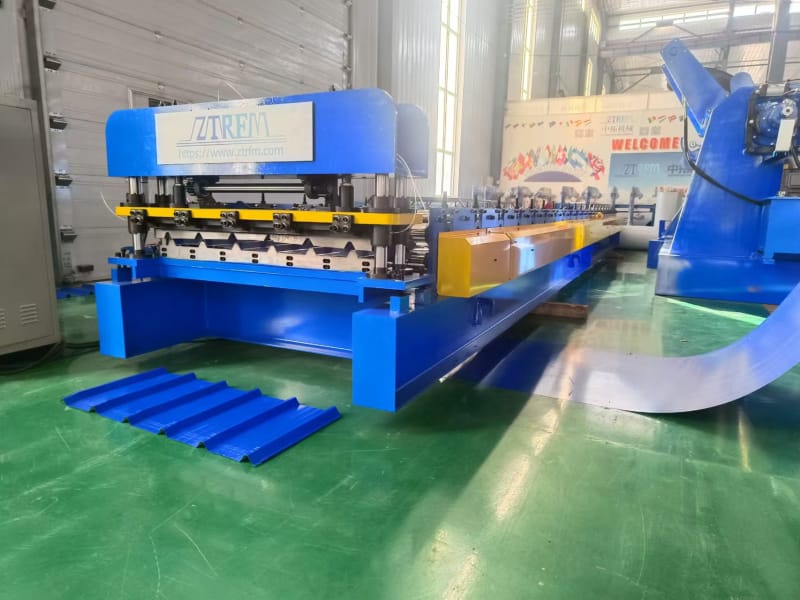
In the field of metal processing, Cangzhou Zhongtuo Roll Forming Machinery Co., Ltd. has always taken technological innovation as its core driving force. Its developed cold roll forming machine has become the trusted choice of global industrial manufacturing enterprises by virtue of its excellent performance parameters and user-friendly design. This equipment is tailor-made for high-strength and high-precision metal forming tasks, particularly outstanding in the production of metal roof tiles, with its core advantages reflected in the comprehensive upgrade of structural strength, intelligent control, and process details.
I. Hardcore Performance: A Robust Industrial-Grade Architecture
The underlying design of the Zhongtuo cold roll forming machine aims to “cope with harsh working conditions,” constructing an industry-leading mechanical structure:
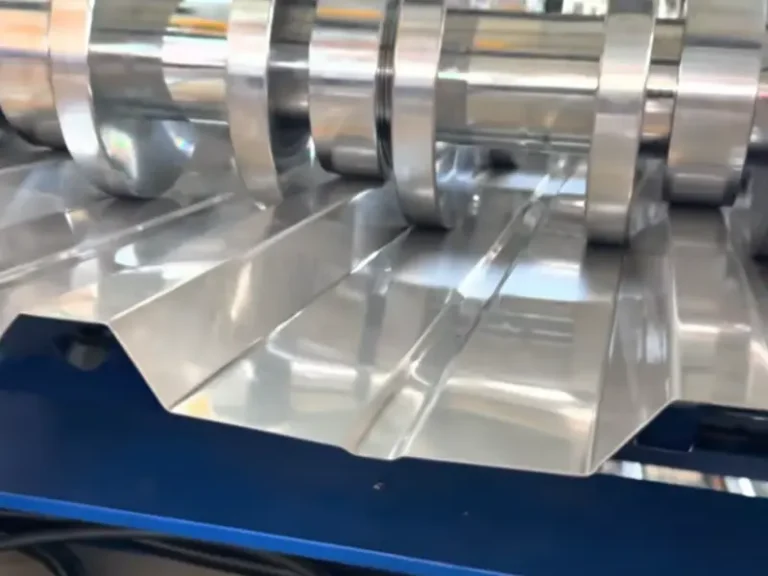
- Forming System: Equipped with 14 to 35 rows of precision forming wheels (the specific number of rows is customized according to the profile drawings), made of high-hardness alloy material, with a surface treated by quenching and chrome plating, enhancing wear resistance by over 30%. Combined with an 80 mm (3.1496 inches) solid steel shaft, it can withstand high-strength cold bending pressure to ensure the forming accuracy of complex profiles at one time.
- Machine Frame: Adopts an H-type 350 mm thick wall plate structure with internal diagonal brace reinforcements. The entire machine weighs 9-10 tons (average 7 tons for similar products), with a 50% increase in rigidity, effectively suppressing vibrations during high-speed operation and extending the equipment’s service life.
II. Intelligent Control: The Core Engine of Precision Production
The equipment is equipped with a PLC automatic control system to achieve full-process digital management:
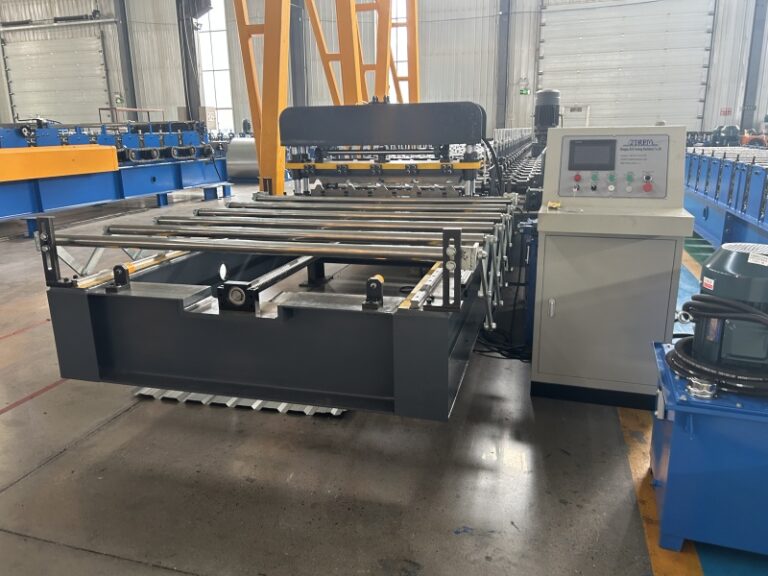
- Human-Machine Interface: A 10-inch color touchscreen integrates functions such as order management, parameter setting, and fault diagnosis. The operation interface is simple and intuitive, supporting multi-language switching, which reduces worker training costs.
- Dynamic Regulation System: Real-time control of forming speed (adjustable from 0-15 meters per minute) and shearing frequency (up to 30 times per minute) through programming, and can store more than 200 groups of order data, switching between different profile production tasks with one click, significantly improving model change efficiency.
- Precision Assurance: Uses a high-precision encoder to real-time monitor the material’s traveling length. Combined with the hydraulic cutting system, the length error is controlled within ±1 mm, and the material utilization rate is increased to over 98%, greatly reducing waste.
III. Detail Innovations: Efficiency and Quality Improvement in the Full Process
The Zhongtuo team has deeply studied the pain points of metal processing and carried out targeted optimizations in key links:
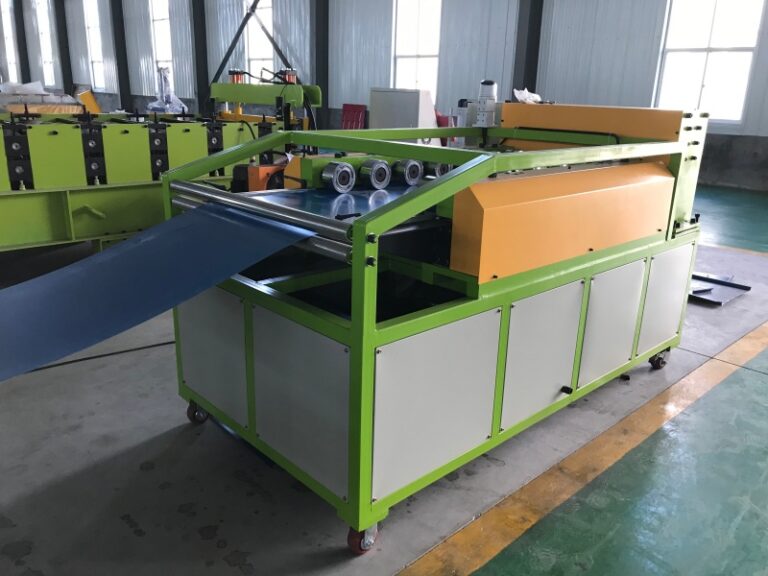
- Upgraded Feeding System: Adopts a steel plate support + double-group guide wheel clamping structure, with manual rollers that can fine-tune the feeding angle (precision ±0.5°), ensuring smooth introduction of the coil into the forming wheel set and avoiding profile distortion caused by deflection.
- Integration of Pre-Cutting and Forming: The front roller shears can complete fixed-length cutting of the coil before it enters the forming station. Combined with the PLC’s intelligent calculation of the stopping point, it reduces waste generation in the subsequent forming section. The rubber pinch rolls eliminate feeding slippage through constant pressure tension control, ensuring the stability of continuous production.
- Hydraulic Shearing System: The hydraulic shear driven by a four-guide-post cylinder is equipped with a thickened shear blade (hardness HRC58-62), with a shearing force of over 20 tons, which can easily cut 3 mm thick steel plates. The cutting edge is smooth and burr-free, requiring no secondary processing.